GITMO ALERT: BIG PHARMA’S DAY OF RECKONING HAS ARRIVED
Harvard scientists just triggered a MASSIVE red alert inside the Deep State. A classified report leaked in May 2025 confirms what they never wanted you to know: Mitochondria are the ROOT of all health — and Big Pharma SABOTAGED them on purpose. The cure was buried. The cover-up is OVER.
Every cell in your body runs on these tiny power plants — and THEY KNEW.
They spent DECADES poisoning your energy, hijacking your biology, and turning your body into a cash cow. Chronic fatigue, brain fog, weight gain, inflammation, aging, cancer — ALL traced back to mitochondrial destruction. And now the truth detonates.
But what did Big Pharma do? They didn’t heal — they PROFITED. They sold pills for every symptom while engineering the root breakdown. They fed you toxins. Then sold you fake cures.
A top Harvard researcher confessed:
“Up to 70% of all chronic disease could be reversed by restoring mitochondria.”
That means: No more statins. No more antidepressants. No more diabetes meds. No more “forever patients.” Their trillion-dollar racket depends on keeping you barely alive, barely functioning — and hooked.
This isn’t medicine. It’s WAR.
And now that war is coming to a head — with tribunals in GITMO locked and loaded. Black sites. Indictments. Military extraction teams are READY. The architects of this sabotage will be HELD ACCOUNTABLE.
The leaked files EXPOSE everything: They knew natural methods worked: red light therapy, NAD+, cold exposure, fasting, B-vitamins, magnesium, CoQ10, REAL nutrition. But they BANNED it. Buried it. Attacked it.
Why? Because freedom from the system is a death sentence for the Deep State.
This is the Great Cellular Uprising. You’ve been robbed of your vitality, your clarity, your LIFE. But now it ends.
The master switch of human health is BACK in your hands.
The truth just nuked the medical matrix. And the traitors? They’re being flown to GITMO under cover of night.
No more lies. No more poison. No more mercy. Their system burns. YOUR ENERGY RISES.
My Clear Warning on Mitochondrial Integrity Under Attack by Biocides, Pesticides, Drugs like mRNA, Antibiotics. The mitochondria, an ancient bacteria giving us our life and all Eukaryotes for food and company and home is being trashed by our civilizations poisons and poisoners on purpose
Ingredients Emitted: aluminum oxide, barium, strontium, and lithium. But wait, there’s more! Some reports also mention the use of coal fly ash, human plasma, unknown pathogens, nanotechnology, and even graphene oxide. Source Public Posts
Grok Thought for 36s
Toxicology summaries below are drawn from authoritative sources such as the Agency for Toxic Substances and Disease Registry (ATSDR) toxicological profiles, EPA assessments, and peer-reviewed studies. These focus on known health effects by relevant exposure routes (especially inhalation for aerosol contexts), dose-dependency, and key targets.
atsdr.cdc.gov +1
Toxicity always depends on dose, duration, form (e.g., soluble vs. insoluble, particle size), route, and individual factors (e.g., age, nutrition, pre-existing disease). Environmental background levels of these substances are typically low and not associated with harm; occupational or high-dose exposures are the primary concern in the data.Aluminum Oxide (Al₂O₃)Aluminum oxide is a common, relatively insoluble form of aluminum. Low-level exposure occurs naturally via food, water, air, and soil with minimal absorption and no clear harm.
atsdr.cdc.gov
Key effects:
Inhalation (primary concern for aerosols/dust): High occupational exposure to respirable dust causes respiratory irritation, coughing, abnormal chest X-rays, and in some cases pulmonary fibrosis or alveolar proteinosis. Animal studies show lung inflammation and macrophage accumulation at elevated levels. atsdr.cdc.gov
Neurological: High aluminum exposure can affect the nervous system (e.g., impaired neurobehavioral performance in animals); human links (e.g., to Alzheimer’s) remain inconclusive and unproven for the oxide form specifically.
Other: Poorly absorbed orally or dermally; not classified as a human carcinogen for non-fibrous forms. No significant reproductive/developmental toxicity at typical exposures.
Regulatory: OSHA PEL ≈ 15 mg/m³ (total dust), 5 mg/m³ (respirable); ACGIH TLV 10 mg/m³ for aluminum oxide. atsdr.cdc.gov
BariumBarium compounds vary widely in solubility—soluble forms (e.g., barium chloride, carbonate) are far more toxic than insoluble ones (e.g., barium sulfate).
atsdr.cdc.gov
Key effects:
Acute high-dose (oral or inhalation): Gastrointestinal distress (vomiting, cramps, diarrhea), followed by hypokalemia (low potassium) leading to muscle weakness/paralysis, cardiac arrhythmias (ventricular tachycardia), hypertension/hypotension, and potentially death. Inhalation of high airborne levels can produce similar systemic effects. atsdr.cdc.gov
Chronic: Possible kidney damage; limited evidence of reproductive/developmental effects in animals at very high doses.
Inhalation: Respiratory tract is a sensitive target; irritation possible.
Carcinogenicity: Not classified as a human carcinogen.
Note: Background air/water levels are low (<0.05 μg/m³ air; ~30 μg/L water average).
Strontium (Stable/Non-Radioactive Form)Stable strontium has low toxicity at environmental levels; it mimics calcium but is a poorer substitute.
atsdr.cdc.gov
Key effects:
Skeletal (oral, high dose): In children/juveniles with poor calcium/protein intake, excess strontium can impair bone mineralization, leading to rickets-like effects or abnormal bone growth. Adults are far less sensitive.
Inhalation: Pure stable strontium compounds show low toxicity; no major systemic effects reported at relevant levels.
Other: No evidence of carcinogenicity, neurotoxicity, or reproductive harm for stable strontium at typical exposures. (Strontium chromate is carcinogenic due to hexavalent chromium, not strontium.)
Radioactive strontium (e.g., Sr-90): Bone-seeking; high exposure causes bone marrow suppression, anemia, and increased cancer risk (leukemia, bone cancer)—not relevant to stable forms.
LithiumLithium (typically as salts) has a narrow therapeutic window; it is used medically for bipolar disorder but becomes toxic at higher exposures.
epa.gov
Key effects:
Neurological: Tremor, confusion, ataxia, seizures, coma at toxic serum levels.
Renal: Nephrogenic diabetes insipidus (excessive urination/thirst), impaired kidney concentrating ability, potential chronic kidney disease with long-term high exposure.
Other: Thyroid dysfunction (goiter), gastrointestinal upset, cardiac effects (arrhythmias). EPA provisional chronic oral RfD is 20 μg/kg/day based on nephrotoxicity. files.knowyourh2o.com
Acute high exposure: Can be life-threatening; monitoring of serum levels is critical in medical use.
Coal Fly AshCoal fly ash is a complex mixture of aluminosilicates plus concentrated heavy metals (As, Pb, Cd, Cr, Hg, etc.), often 2–10× higher than in source coal. It is not a single “ingredient” but a source of multiple toxicants.
sciencedirect.com
Key effects:
Inhalation of particles: Respiratory inflammation, oxidative stress (ROS generation), lung injury, reduced antimicrobial defense in airways, potential cardiovascular effects, and genotoxicity/DNA damage. Chronic exposure linked to increased lung cancer risk and systemic metal toxicity.
Leaching into water: Heavy metals cause neurodevelopmental harm (Pb), cancer (As, Cr), kidney/liver damage, and other systemic effects.
Overall: Toxicity driven by bioavailable metals and fine/ultrafine particles; oxidative stress and inflammation are central mechanisms. Not inherently “pathogenic” but hazardous due to contaminants. psr.org
Human PlasmaHuman plasma is a biological fluid (not a chemical toxin). If aerosolized (highly atypical), it would not act as a classic toxicant but could trigger immune/allergic responses, hypersensitivity, or—if contaminated—transmit blood-borne pathogens. No standard chemical toxicology profile exists; it is regulated as a biohazard in medical settings rather than an environmental pollutant.Unknown PathogensWithout identification, no specific toxicology summary is possible. Viable aerosolized pathogens could cause infectious disease (respiratory, systemic, etc.) depending on the organism, dose, and host immunity. Risk is inherently unpredictable and potentially severe.Nanotechnology (General)“Nano” refers to engineered particles <100 nm. Effects are highly material-specific (size, shape, surface chemistry, composition). General concerns include greater lung penetration, oxidative stress, inflammation, cellular uptake, and potential translocation to other organs. Toxicity varies widely—some nanomaterials are inert; others cause cytotoxicity or genotoxicity in high-dose lab studies. No single profile applies.Graphene OxideGraphene oxide (GO) toxicity is dose-, size-, and purity-dependent. In vitro and animal studies show cytotoxicity via oxidative stress (ROS), mitochondrial dysfunction, reduced glutathione, DNA damage, and apoptosis.
pmc.ncbi.nlm.nih.gov
Key effects:
Cellular/lung: Inflammation, lung injury/edema at high doses in animals; potential for oxidative damage.
Human data: A controlled acute inhalation study of highly purified, thin (1–2 nm) nanometer-sized GO nanosheets in healthy volunteers found no adverse effects on lung function, cardiovascular parameters, or inflammation markers. nature.com
Overall: Risk appears low for acute, low-dose, high-purity exposures but higher with impurities or chronic high exposure. Long-term data are limited.
Bottom line: These substances have well-documented toxicity profiles at sufficiently high exposures, primarily via inhalation (respiratory/systemic effects) or ingestion (metal-specific effects). Real-world atmospheric concentrations in most locations remain far below levels linked to harm. Official geoengineering research has focused on other materials (e.g., sulfates), and claims of widespread deployment of the above lack verified evidence. Consult medical professionals for exposure concerns; data are from controlled studies and occupational epidemiology, not speculative scenarios.
Be aware government sites have in many instances been compromised in recent years by corporate influencers with conflicts of interest, hirees, corruption, and military secrecy regarding weaponization of substances to increase toxicity so its possible this toxicology summary is a gross understatement.
Lysol is a disinfectant designed for use on surfaces and contains phenol, a protoplasmic poison. Poisoning from Lysol can occur through oral ingestion, skin contact, inhalation, and other means. Phenol is mainly metabolized by the kidneys, and after absorption, it causes widespread capillary damage and clotting in superficial blood vessels. This results in urine that is scanty with traces of albumin, and microscopically, blood and calcium oxalate crystals are observed. The urine turns olive green or brown on standing, a phenomenon called carboluria.Studies by J. Jyrkkanen 2020 on antibiotic impacts on mitochondria showed that ROS damage and ruptures of mitochondria resulted in pathology leading to loss of oxidative phosphorylation, likelihood of increase in cancers favorite metabolism aerobic glycolysis, suppression of the p53 DNA repair gene, cardiovascular ailments and immune dysfunction. The similarity of damage reported here by google AI suggest a similar pathology for Lysol type antibiotic cleaners.Otherwise damaged mitochondria induced effects have been observed also for some common pesticides, and mRNA vaccine.The problem arises from the fact that Lysol is an antibiotic that kills bacteria and mitochondria are a highly modified essential symbiotic derivative of an ancient bacteria.
Characteristics
Values
Sensation
Constriction around the throat, burning pain from the mouth to the epigastrium
Taste
Sour and acidic
Urine
Scanty, with traces of albumin
Microscopic Observations
Blood and calcium oxalate crystals
Other Observations
Burns on the face and skin, mucosa of the mouth, tongue, pharynx, and esophagus may be bleached
Phenol Metabolism
Converted into hydroquinone and pyrocatechol, then excreted in urine
Urine Color
Olive green or brown on standing (carboluria)
Impacts on Mitochondria
The active ingredient benzalkonium chloride reveal a pattern of cellular toxicity mediated by mitochondrial damage.
Disruption of Energy Production
QACs which are commonly used in antimicrobial products, have been shown to inhibit mitochondrial respiration specifically at Complex I of the electron transport chain, leading to a decrease in cellular energy (ATP)
Structural Damage or Fragmentation
Exposure to these compounds causes structural disruption, resulting in mitochondrial fragmentation and changes in mitochondrial membrane potential
Induction of Oxidative Stress
Similar to other chemical sanitizers, these compounds can induce the generation of reactive oxygen species (ROS) within the mitochondria, causing further impairment.
Initiation of Apoptosis
Mitochondrial dysfunction caused by these surfactants can trigger the mitochondrial pathway of apoptosis or programmed cell death
Compounds with Documented Mitochondrial Toxicity
Quaternary Ammonium Compounds (QAC’s/BAC’s) induce mitochondrial dysfunction in epithelial cells
Cetylpyridinium Chloride (CPC)CPC causes severe nanostructural disruption, reduces ATP production, and acts as a mitochondrial inhibitor.
Ammonium Hydroxide a caustic compound present in some cleaners can cause severe irritation and potential cellular disruption.
CONCLUSION
These disinfectants can cause significant mitochondrial dysfunction in mammalian cells leading to significant morbidity and mortality. While disinfectant effect may reduce exposure to pathogenic microbes in the short term the harm to beneficial endogenous mitochondria may cause health issues in the long term.
References
Jyrkkanen jccm-aid1104
Jyrkkanen J. Antibiotic induced changes to mitochondria result in potential contributions to carcinogenesis, heart pathologies, other medical conditions and ecosystem risks. J Cardiol Cardiovasc Med. 2020; 5: 163-171
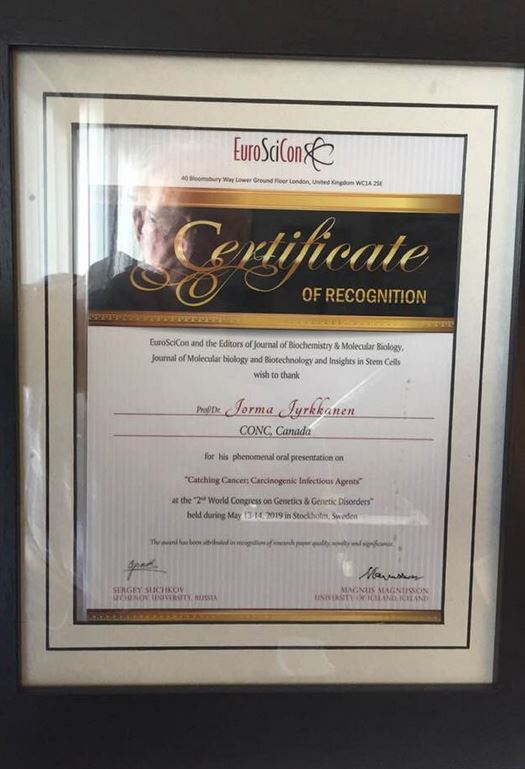


 Personal Page of Jorma Jyrkkanen, Composer, Author, Researcher